
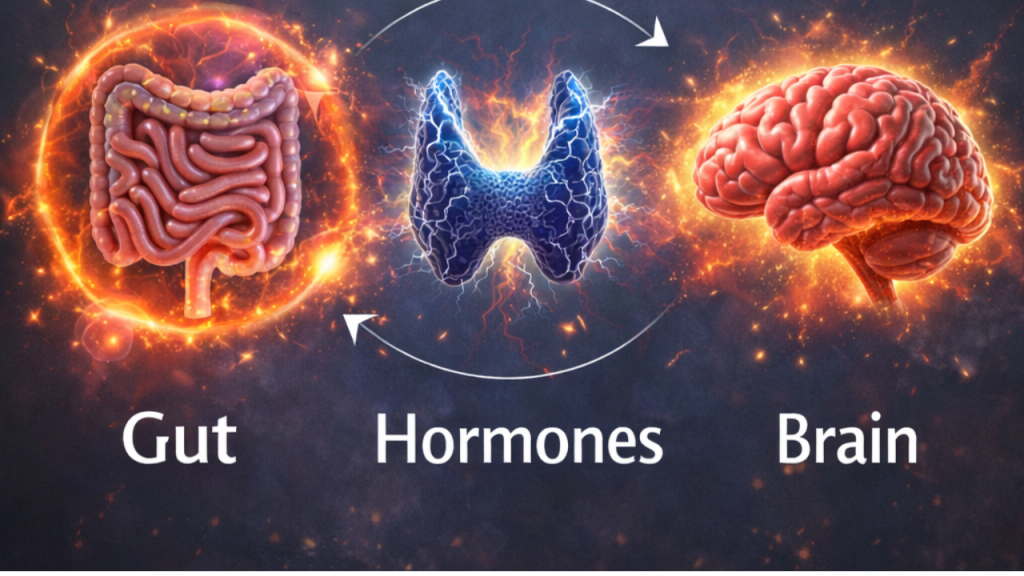
Many women notice a shift in digestion in their mid-thirties and beyond. Foods once tolerated start triggering bloating, fatigue, joint stiffness, skin flare-ups, anxiety, and stubborn weight. This change is not random. It reflects a deeper transformation occurring inside the gut.
The gut becomes the central control room where inflammation, hormones, immunity, metabolism, and brain chemistry intersect.
Understanding this intersection allows you to regain stability across the entire body.
The gut as the immune command center
Roughly seventy percent of your immune system lives inside the gut. Every meal, stress signal, hormone fluctuation, and toxin exposure passes through this environment. When the gut lining remains intact and the microbiome stays diverse, immune activity remains balanced.
As estrogen begins fluctuating after the mid-thirties, gut permeability increases. The protective barrier between the gut and bloodstream weakens. This condition, often described as increased intestinal permeability or leaky gut, allows bacterial fragments and food particles to pass into circulation. The immune system interprets these particles as threats and launches an inflammatory response.
This inflammation does not stay confined to the gut. It spreads systemically, affecting joints, skin, thyroid function, brain chemistry, ovaries, and blood sugar control.
Microbiome shifts and estrogen recycling
Your gut microbiome contains a specialized group of bacteria known as the estrobolome. These bacteria regulate how estrogen is broken down, recycled, and eliminated. When the microbiome loses diversity, estrogen recycling becomes distorted.
Poor estrogen clearance contributes to estrogen dominance. This worsens PMS, fibroids, heavy cycles, migraines, breast tenderness, water retention, mood instability, and fat storage around the hips and abdomen.
Inflammation further suppresses healthy microbial diversity, creating a feedback loop between gut dysfunction and hormonal imbalance.
Bloating and metabolic disruption
Bloating after meals often signals fermentation imbalance inside the small intestine. Slowed digestion, enzyme deficiency, and microbial overgrowth generate gas, pressure, and abdominal swelling. This mechanical distension activates inflammatory pathways and disrupts vagal nerve signaling between the gut and brain.
Blood sugar regulation becomes unstable. Insulin resistance increases. Cravings intensify. Energy drops. The metabolism slows its adaptive capacity.
What many women experience as weight gain begins as immune and microbial dysfunction.
Autoimmune risk and the gut barrier
Autoimmune conditions rise sharply in women after the mid-thirties. Hashimoto’s thyroiditis, rheumatoid arthritis, lupus, psoriasis, and inflammatory bowel disorders all share one central feature: loss of gut barrier integrity.
When immune cells repeatedly encounter foreign particles in the bloodstream, tolerance breaks down. The immune system begins attacking tissues that resemble these particles. Thyroid tissue becomes one of the most common casualties.
Restoring gut barrier function reduces autoimmune activation at its source.
Mental health links and brain inflammation
The gut produces over ninety percent of the body’s serotonin and a large portion of dopamine precursors. When inflammation disrupts the microbiome, neurotransmitter synthesis falls. Anxiety, low mood, irritability, brain fog, and poor concentration follow.
Inflammatory cytokines cross the blood brain barrier and directly impair cognitive processing and emotional regulation. Many mood symptoms attributed to stress or aging originate in gut-driven neuroinflammation.
Why gut healing requires tracking patterns
Gut symptoms rarely exist on their own. Bloating, fatigue, skin reactions, mood shifts, joint stiffness, and weight changes are often driven by overlapping inputs such as food choices, stress load, sleep quality, hormonal phase, and digestion timing.
Because these signals interact, many women struggle to identify what is truly aggravating their gut. Memory alone is unreliable, especially when symptoms fluctuate.
Tracking creates clarity.
When you log food, digestion, sleep, stress, energy, pain, and hormonal context together, patterns begin to emerge. You may notice bloating worsens after certain foods combined with poor sleep. Energy improves when digestion stabilises. Mood shifts correlate with gut discomfort. These links are difficult to see without records.
The Rebalance40 Anti Inflammatory Tracker is designed to support this awareness. It allows you to log daily entries, update them at any time, and review both daily and weekly trends. Nothing you enter disappears. You can also download your records as a PDF or CSV to review progress over time.
If you want to understand how your gut health is influencing inflammation, hormones, and immunity, you can explore the Rebalance40 Anti Inflammatory Tracker here.
How to stabilize the gut-hormone-immune axis
The body does not heal through restriction. It heals through nourishment, consistency, and signal clarity.
Key strategies include:
Restoring microbial diversity
Focus on polyphenol-rich foods, colorful vegetables, fermented foods, herbs, spices, berries, nuts, seeds, olive oil, and omega-3 fats.
Repairing the gut lining
Amino acids such as glutamine, collagen peptides, zinc, vitamin A, and vitamin D strengthen tight junction integrity and accelerate mucosal healing.
Stabilizing blood sugar
Protein, fiber, and healthy fats at every meal prevent glucose spikes that feed inflammation.
Reducing immune burden
Eliminate ultra-processed foods, seed oils, refined sugars, and frequent alcohol exposure.
Supporting estrogen clearance
Cruciferous vegetables, flaxseed, fiber, adequate hydration, and consistent bowel movements ensure healthy estrogen metabolism.
Managing nervous system stress
Deep sleep, walking, sunlight exposure, breathwork, and strength training reduce cortisol, which otherwise damages gut barrier function.
The deeper message
When gut health stabilizes, inflammation falls. When inflammation falls, hormones regain coordination. When hormones stabilize, metabolism, mood, immunity, and energy recover together.
Your body is not breaking down. It is responding to biochemical signals. Change the signals, and the system recalibrates.
Why awareness accelerates gut recovery
Gut healing does not happen through restriction or perfection. It happens through consistent nourishment and paying attention to the body’s feedback.
Tracking allows you to see whether dietary changes, improved sleep, stress reduction, or gut supportive foods are reducing bloating, stabilising energy, improving mood, and lowering inflammatory symptoms. These improvements often occur gradually and are easy to miss without records.
The Rebalance40 Anti Inflammatory Tracker supports this process by helping you notice trends rather than focusing on individual days. It is not a calorie tracker or a fitness app. It is a tool for understanding how inflammation responds to daily choices.
You can view the Rebalance40 Anti Inflammatory Tracker and meal plan options here.
 Rebalance40
Leave a comment