
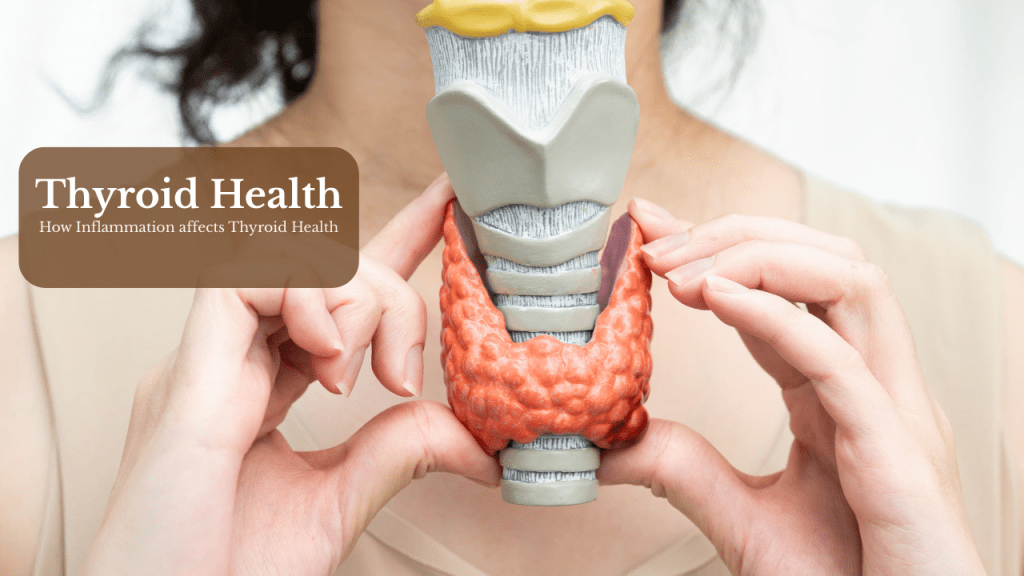
When women describe fatigue, cold sensitivity, weight gain, brain fog, thinning hair, and low motivation, thyroid dysfunction often sits at the center. Yet standard lab tests frequently return “normal.” The missing piece is inflammation and gut driven hormone disruption.
The thyroid does not operate in isolation. It functions inside a network involving the immune system, gut, liver, adrenal glands, and brain. When inflammation enters this network, thyroid signaling weakens long before blood tests reveal dysfunction.
Why thyroid symptoms appear without abnormal labs
The thyroid produces mostly T4 hormone, which must be converted into active T3 inside cells. Inflammation interferes with this conversion by increasing reverse T3, an inactive hormone that blocks metabolic signaling. As a result, cells behave as if they are hypothyroid even while T4 levels appear normal.
This explains why women experience classic hypothyroid symptoms despite being told their labs look fine.
Inflammation and autoimmune thyroid disease
Hashimoto’s thyroiditis remains the leading cause of hypothyroidism in women. Autoimmune thyroid disease emerges when immune tolerance collapses, most often following prolonged gut barrier disruption.
When bacterial fragments and food antigens enter the bloodstream, the immune system remains in constant activation. Over time, immune cells mistake thyroid tissue for foreign invaders and attack it. The inflammation damages thyroid structure, reduces hormone output, and amplifies metabolic slowdown.
Gut dysfunction as the hidden trigger
The majority of thyroid hormone conversion occurs in the gut and liver. Poor gut integrity impairs nutrient absorption of selenium, zinc, iron, iodine, and tyrosine, all essential for thyroid hormone production and activation.
At the same time, microbiome imbalance alters estrogen metabolism, cortisol regulation, and immune signaling, further suppressing thyroid performance.
Brain fog and mood instability
Thyroid hormones regulate neurotransmitter sensitivity. When T3 declines inside brain cells, dopamine and serotonin signaling weakens. Cognitive processing slows. Motivation falls. Memory becomes unreliable. Anxiety and depression often intensify.
These symptoms reflect neurochemical disruption driven by inflammatory interference with thyroid signaling.
Why thyroid symptoms persist without tracking patterns
Thyroid symptoms rarely come from a single cause. They develop through the interaction of inflammation, gut dysfunction, blood sugar instability, stress load, and hormonal shifts. Because these drivers overlap, many women struggle to identify what is actually worsening their symptoms.
Tracking changes this.
When you track food, digestion, sleep, stress, energy, mood, and body signals together, patterns begin to surface. You may notice fatigue worsens after poor sleep. Cold sensitivity increases during high stress weeks. Brain fog improves when digestion stabilises. These links are difficult to see without written records.
The Rebalance40 Anti Inflammatory Tracker is designed to support this awareness. It allows you to log daily entries, update them at any time, and review both daily and weekly trends. Nothing you enter disappears. You can also download your records as a PDF or CSV to review your progress over time.
If you want to understand how inflammation and gut health are affecting your thyroid symptoms, you can explore the Rebalance40 Anti Inflammatory Tracker here.
The metabolic consequences
Low cellular thyroid signaling reduces mitochondrial output. Fewer calories convert into usable energy. The body conserves fuel by slowing heart rate, digestion, temperature, and fat oxidation. Hunger hormones increase while satiety hormones lose sensitivity.
Weight gain becomes resistant to diet and exercise.
How to stabilize thyroid function through inflammation control
Reduce immune activation
Remove ultra-processed foods, refined sugars, seed oils, and excessive alcohol.
Repair the gut barrier
Emphasize collagen, bone broth, glutamine, zinc, vitamin A, and fermented foods.
Support thyroid nutrients
Ensure sufficient intake of selenium, zinc, iodine, iron, vitamin D, magnesium, and B vitamins.
Stabilize blood sugar
Protein and fiber at each meal protect thyroid hormone conversion.
Lower cortisol
Consistent sleep, morning light, walking, and strength training restore adrenal-thyroid balance.
The body’s recovery pathway
When inflammation falls, immune tolerance improves. When immune tolerance improves, thyroid tissue stabilizes. When thyroid signaling strengthens, metabolism, mood, cognition, and energy recover together.
This is why addressing inflammation and gut health becomes the foundation of thyroid healing.
Why awareness supports thyroid recovery
Thyroid healing does not come from forcing the body harder. It comes from reducing inflammatory load and responding to the body’s feedback over time.
Tracking allows you to see whether dietary changes, gut support, improved sleep, or stress reduction are improving energy, mood, digestion, and metabolic resilience. These improvements often occur gradually and are easy to miss without records.
The Rebalance40 Anti Inflammatory Tracker supports this process by helping you notice trends rather than focusing on single days. It is not a calorie tracker or a fitness app. It is a tool for understanding how inflammation responds to daily choices.
You can view the Rebalance40 Anti Inflammatory Tracker and meal plan options here.
 Rebalance40
Leave a comment