
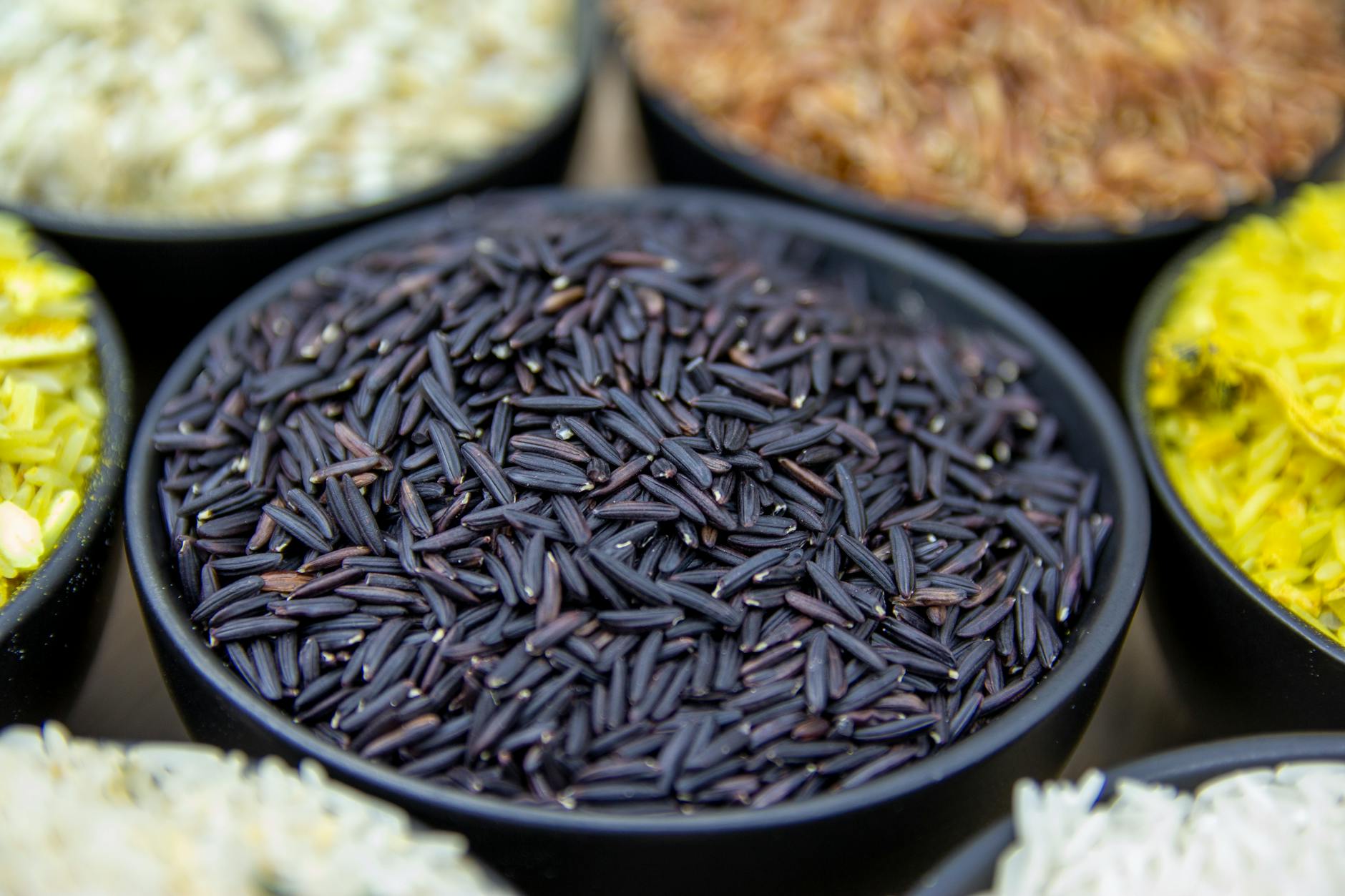
If you enjoy rice but want to reduce inflammation, this is one of the simplest swaps you can make.
White rice is easy to digest and widely used, but it offers limited fibre and fewer protective plant compounds. In midlife, when hormone shifts can increase inflammatory sensitivity, blood sugar swings and gut imbalances matter more than they once did.
Black rice offers a smarter option.
Why inflammation rises in midlife
As estrogen fluctuates in perimenopause and menopause, the body becomes more sensitive to stress, glucose spikes, poor sleep, and gut disruption. Inflammation can show up as:
- Bloating
- Joint discomfort
- Brain fog
- Fatigue
- Puffiness
- Digestive changes
Small daily food choices begin to matter more. This is not about restriction. It is about reducing inflammatory load consistently.
Why black rice is different
Black rice contains anthocyanins, the same antioxidant compounds found in blueberries. These plant compounds help regulate inflammatory pathways and support vascular and metabolic health.
Compared to white rice, black rice provides:
– Higher polyphenol content
– More fibre for steadier blood sugar
– Better support for gut bacteria diversity
White rice digests quickly and can cause sharper glucose rises. Repeated spikes contribute to insulin stress, which can increase inflammatory signalling over time.
Black rice slows that process down.
Fibre and glucose stability
Fibre is critical for midlife women. It helps:
- Improve insulin sensitivity
- Support bowel regularity
- Feed beneficial gut bacteria
- Reduce systemic inflammation
Black rice contains significantly more fibre than white rice. That means steadier energy and fewer reactive crashes.
If you struggle with afternoon fatigue or sugar cravings, this swap can make a noticeable difference over weeks.
Gut health and inflammation
Your gut microbiome influences inflammation, mood, immunity, and hormone balance. Diverse plant compounds feed diverse bacteria.
Black rice supports this diversity better than refined white rice.
When gut balance improves, many women notice:
- Less bloating
- More stable digestion
- Improved energy
- Fewer inflammatory flares
This is not about one meal. It is about repeated supportive choices.
How to use black rice
Cook black rice as you would regular rice. It has a slightly nutty flavour and firm texture.
Pair it with:
– Salmon and leafy greens
– Beans and olive oil
– Roasted vegetables and tahini
– Chicken and cruciferous vegetables
Aim for half to one cup cooked per serving, several days per week if it suits you.
You do not need to eliminate white rice completely. This is a swap, not a rule.
Tracking makes the difference
Here is where most women miss the opportunity.
You can make healthy swaps, but unless you track how your body responds, you are still guessing.
- Did bloating reduce over three days?
- Was your energy steadier?
- Did joint stiffness improve?
- Did sleep feel deeper?
The Rebalance40 Anti Inflammatory Tracker helps you see whether this swap is working for you.
You log:
– What you ate
– How your body felt
– Sleep, stress, hydration, movement, and hormonal context
Over time, you can see whether black rice supports your digestion and inflammation levels compared to white rice.
This is how simple swaps become measurable change.
Midlife inflammation is rarely solved by extreme diets. It improves through consistent, supportive patterns.
Swapping white rice for black rice is one small, powerful step.
And when you track your response, you turn that step into clarity.
 Rebalance40
Leave a comment