
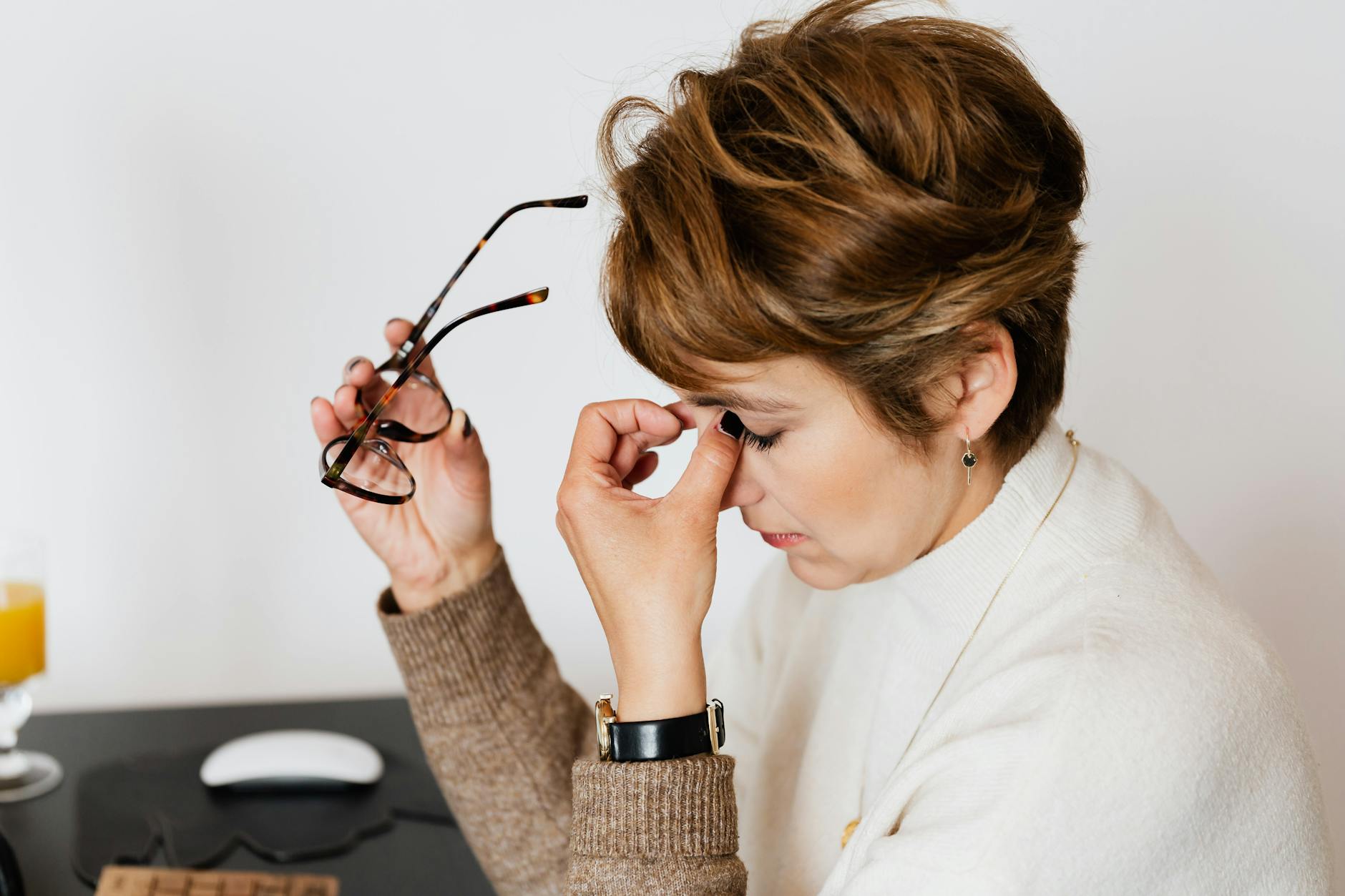

- Fatigue.
- Sugar cravings.
- Mood swings.
- Belly weight gain.
If you are over 40 and noticing these symptoms, you may assume your hormones are the problem.
But what if chronic stress is driving the same symptoms?
The truth is this: hormone imbalance and chronic stress often look identical on the surface. The body uses overlapping pathways, which is why so many women feel confused about what is really happening.
Why the symptoms overlap
Both hormone imbalance and chronic stress influence:
- Cortisol output
- Blood sugar regulation
- Insulin response
- Sleep quality
- Fat storage patterns
- Inflammatory signalling
When cortisol stays elevated for long periods, it disrupts other hormones including estrogen, progesterone, thyroid hormones, and insulin. That disruption creates symptoms that feel hormonal.
At the same time, shifting estrogen levels in perimenopause make the nervous system more reactive to stress. So stress symptoms can intensify during hormonal transition.
It becomes a loop.
How chronic stress mimics hormone imbalance
Chronic stress can cause:
- Fatigue from poor sleep and adrenal strain
- Sugar cravings due to unstable glucose
- Mood swings from cortisol spikes
- Belly weight gain linked to insulin resistance
If your lifestyle includes high stress, inconsistent sleep, blood sugar swings, and little recovery, stress may be the primary driver.
How hormone shifts amplify stress
As estrogen fluctuates:
- Inflammation can rise more easily
- Sleep can become lighter
- Cortisol sensitivity increases
- Blood sugar becomes less stable
Even normal life stress can feel amplified.
That is why midlife symptoms often feel sudden and confusing.
How to begin telling the difference
Instead of guessing, look for patterns.
Ask yourself:
- Do symptoms worsen after stressful weeks?
- Do they improve after rest?
- Do they fluctuate with your cycle?
- Are they worse after poor sleep?
- Do high sugar days increase symptoms?
Hormonal patterns often show rhythmic fluctuation. Stress patterns tend to follow life load and recovery.
But most women cannot answer these questions clearly because memory is unreliable.
This is where structured tracking changes everything.
Why tracking matters
When you track:
– Food intake
– Sleep quality
– Stress level
– Energy
– Mood
– Hormonal phase
– Inflammatory symptoms
You begin to see whether symptoms correlate more strongly with stress load, hormonal timing, or both.
The Rebalance40 Anti Inflammatory Tracker was built for this exact confusion.
It connects:
– What you ate
– How you slept
– How stressed you felt
– Your hormonal context
– How your body responded
Over days and weeks, patterns emerge.
You may notice that fatigue follows poor sleep and high stress rather than cycle phase. Or that mood swings cluster around specific hormonal windows. Or that both stress and hormones amplify symptoms together.
This clarity reduces anxiety and supports better decisions.
What to focus on first
If you are unsure whether hormones or stress are driving your symptoms, start by stabilising:
- Sleep timing
- Protein and fibre intake
- Hydration
- Gentle movement
- Stress exposure
Then track consistently for two weeks.
Data replaces assumption.
Final thought
It is not hormones or stress.
It is often hormones plus stress interacting through inflammation and blood sugar pathways.
When you understand the pattern, you stop chasing random fixes and start making targeted adjustments.
You do not need more willpower.
You need visibility.





Leave a Reply