


Your Food Is Not the Problem. Your Patterns Are.
You have overhauled your diet. You are avoiding gluten, cutting sugar, eating more vegetables, choosing organic where you can. And yet the bloating continues. The fatigue lingers. The inflammation does not shift in the way you expected.
If this sounds familiar, the issue is almost certainly not your food.
Food is one input into a much larger system. Inflammation is the output of that system — and it responds to everything feeding into it: how you sleep, how you move, how stressed your nervous system is, what you put on your skin, what you cook in, what you clean your home with, and how well you are absorbing and eliminating what you consume.
When women in their mid-thirties and beyond feel stuck despite eating well, it is usually because the non-food patterns are running unchecked. These patterns shape your hormonal environment, your gut permeability, your immune activation, and your body’s ability to clear the inflammatory load it accumulates each day.
This post covers the key patterns beyond food that drive chronic inflammation — and how to start identifying which ones are working against you.
Pattern one: Sleep and circadian disruption
Sleep is not rest. It is active biological repair. During deep sleep, the glymphatic system clears inflammatory waste from the brain, immune cells consolidate their activity, cortisol resets, and the gut lining undergoes mucosal repair. Disrupting this process even partially has measurable inflammatory consequences.
A landmark study published in Sleep found that just one night of poor sleep elevated circulating levels of IL-6 and TNF-α — two of the primary cytokines driving systemic inflammation. Chronic sleep disruption maintains these cytokines at persistently elevated levels, keeping the immune system in a state of low-grade activation regardless of dietary input.
After the mid-thirties, sleep architecture changes. Women in perimenopause experience more fragmented sleep, reduced deep sleep stages, and night waking associated with hormonal fluctuation. This is not purely a hormonal problem — it is also an inflammatory one, because poor sleep elevates cortisol, and elevated cortisol increases gut permeability, which feeds further inflammation.
Circadian rhythm matters as much as sleep duration. Eating late, using bright screens after dark, and irregular wake times all suppress melatonin, disrupt cortisol patterning, and impair the overnight repair processes that reduce inflammatory burden. Your body’s inflammatory response follows a circadian rhythm. Undermining that rhythm keeps inflammation elevated in ways that no amount of anti-inflammatory eating can fully compensate for.
What this means in practice: Prioritise sleep consistency over sleep duration. A regular wake time anchors your circadian rhythm more effectively than lying in. Reduce blue light exposure after 9pm. Eat your last meal at least two to three hours before bed to allow digestion to settle before your repair window opens.
Pattern two: Movement — and the danger of both too little and too much
Moderate, consistent movement is one of the most well-evidenced anti-inflammatory interventions available. It reduces circulating CRP and IL-6, improves insulin sensitivity, supports lymphatic drainage, enhances mitochondrial function, and promotes microbial diversity in the gut.
But the relationship between exercise and inflammation is not linear. Too little movement allows inflammatory metabolites to accumulate, particularly in visceral adipose tissue, which is itself an active producer of pro-inflammatory cytokines. Too much high-intensity exercise without adequate recovery elevates cortisol, suppresses immune function, and increases intestinal permeability — a pattern sometimes called exercise-induced leaky gut.
For women in their mid-thirties and beyond, the most protective movement pattern typically combines strength training two to three times per week — which builds metabolically active muscle tissue, improves glucose disposal, and reduces visceral fat — with daily low-intensity activity such as walking, which activates the parasympathetic nervous system, supports lymphatic flow, and keeps cortisol in a healthy range.
Walking after meals is particularly useful. Research published in Sports Medicine found that a ten-minute walk after eating meaningfully blunted postprandial glucose spikes compared to sitting. Flattening blood sugar throughout the day is one of the most direct ways to reduce the cumulative inflammatory load that drives the symptoms described in the pin description of this post.
What this means in practice: If you are currently doing little movement, start with daily walking before adding intensity. If you are doing significant amounts of high-intensity exercise but still feel inflamed, fatigued, or bloated, recovery may be the missing variable — not more effort.
For more on anti-inflammatory movement, footwear, and exercise support, see our guide to [Anti-Inflammatory Aids — Exercise and Footwear].
Pattern three: Hydration and lymphatic clearance
Hydration is consistently underestimated as an inflammatory variable. The lymphatic system — which clears cellular waste, immune debris, and inflammatory byproducts from tissues — is entirely dependent on adequate fluid intake to function. Unlike the cardiovascular system, the lymphatic system has no pump. It relies on movement, breathing, and hydration to keep waste moving toward elimination.
Mild dehydration thickens lymphatic fluid, slows clearance, and allows inflammatory mediators to accumulate in tissues. It also concentrates the gut environment, slowing transit, altering microbial balance, and reducing the mucosal layer that protects the gut lining from immune activation.
What you hydrate with matters as much as how much. Tap water in many regions contains chlorine and chloramine compounds that, at chronic low-level exposure, have been associated with shifts in gut microbial composition. Fluoride, while present at regulated levels, may affect thyroid function in sensitive individuals. Filtered water — through a solid carbon block or reverse osmosis filter — reduces this chemical load meaningfully.
Herbal teas, particularly ginger, turmeric, and green tea, contribute to hydration while delivering polyphenols and anti-inflammatory compounds that support the gut and immune system. Electrolyte balance also matters: sodium, potassium, and magnesium regulate fluid movement across cell membranes. If you are drinking adequate water but still experiencing bloating or fatigue, mineral depletion may be a contributing factor.
What this means in practice: Aim for consistent hydration throughout the day rather than large volumes at once. Add a pinch of good quality sea salt or a slice of lemon to water in the morning to support electrolyte balance. Consider a water filter if you are not already using one, particularly if your digestion feels reactive.
Pattern four: Your environment — cookware, cosmetics, detergents, and the invisible inflammatory load
This is the pattern most often overlooked, and for many women it represents a significant and entirely unaddressed source of chronic immune activation.
The average woman applies between nine and fifteen personal care products to her body each morning before leaving the house. Each product contains multiple chemical compounds, many of which are endocrine-disrupting, immunogenic, or directly inflammatory. Parabens, phthalates, synthetic fragrances, sodium lauryl sulphate, and formaldehyde-releasing preservatives are among the most commonly implicated.
These compounds do not stay on the surface. The skin is a permeable membrane. Dermal absorption is well-documented for many of these substances, and their systemic effects — particularly on oestrogen signalling, thyroid function, and immune regulation — are increasingly supported by the research literature. A 2020 paper in Environmental Health Perspectives found that switching to low-chemical personal care products for just three days measurably reduced urinary phthalate and paraben concentrations in adolescent girls.
Fragrance deserves particular attention. Synthetic fragrance is one of the most common sources of contact inflammation and is present not just in perfume but in most conventional detergents, fabric softeners, dryer sheets, candles, air fresheners, and cleaning products. The term “fragrance” or “parfum” on an ingredient list can represent a blend of dozens of undisclosed chemicals, including known sensitisers and respiratory irritants.
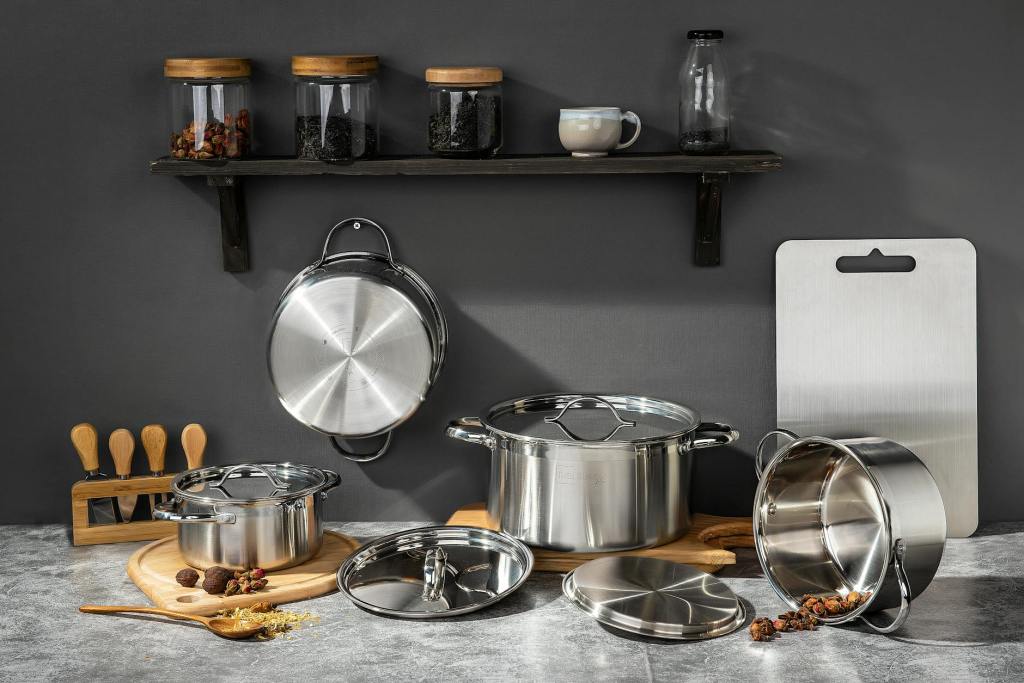
Cookware is another frequently overlooked source. Non-stick coatings — particularly older PTFE-based pans — release perfluoroalkyl substances (PFAS) when heated, especially at high temperatures or when the coating is scratched. PFAS compounds are persistent, bioaccumulative, and have been associated in population studies with elevated inflammatory markers, immune dysregulation, thyroid disruption, and reduced vaccine response. Replacing non-stick cookware with cast iron, stainless steel, or ceramic alternatives removes this source of daily chemical exposure entirely.
Household cleaning products, dishwasher tablets, laundry detergents, and synthetic room fragrances contribute to the cumulative indoor chemical load. The indoor air quality of a conventionally cleaned home is frequently more polluted than outdoor air in an urban environment, driven largely by volatile organic compounds from cleaning and personal care products.
What this means in practice: You do not need to replace everything at once. A strategic, gradual transition yields significant results. Start with the products that have the greatest skin contact time — moisturisers, deodorants, and body wash. Then move to laundry products, which leave residue on clothing and bedding in direct contact with your skin for hours at a time. Choose fragrance-free wherever possible.
For a detailed guide to low-chemical, inflammation-aware home choices, see our [Anti-Inflammatory Home Essentials] and [Anti-Inflammatory Kitchen Essentials] guides.
Pattern five: Stress and the nervous system
Cortisol is the most potent single driver of gut permeability. When the nervous system remains in a prolonged stress state — even at a low, functional level that does not feel like acute stress — cortisol stays elevated, tight junction proteins in the gut lining degrade, and immune activation increases systemically.
This is why women who eat impeccably but carry high background stress often continue to experience gut symptoms, hormonal disruption, and inflammation. The gut cannot repair in a threat state. Digestive enzyme output drops. Gut motility slows. The microbiome shifts toward dysbiosis. The body redirects resources away from repair and toward alert readiness.
Breathwork, particularly slow exhale-extended breathing such as the 4-7-8 method or box breathing, activates the vagus nerve and shifts the autonomic nervous system toward parasympathetic dominance within minutes. This is not wellness philosophy — it is measurable physiology. Vagal tone is directly correlated with gut barrier integrity, immune regulation, and inflammatory control.
Sunlight exposure in the morning anchors the cortisol awakening response, supports vitamin D synthesis, and regulates the serotonin-melatonin axis — all of which reduce the inflammatory burden carried across the day.
Pattern six: Elimination and toxic load clearance
The body’s ability to clear the inflammatory byproducts it generates — through the liver, kidneys, lymph, bowel, and skin — is as important as reducing inflammatory inputs. If elimination is sluggish, the inflammatory load accumulates regardless of how well you eat or how clean your environment is.
Bowel regularity is a key marker here. Daily elimination supports oestrogen clearance via the estrobolome, reduces microbial fermentation in the colon, and prevents the reabsorption of toxins that the liver has already processed for elimination. Constipation keeps this material in circulation.
Liver support — through bitter vegetables, cruciferous foods, adequate hydration, and reduced alcohol — maintains the phase one and phase two detoxification pathways that process hormones, environmental chemicals, and inflammatory metabolites. The skin also contributes through sweat. Regular heat exposure, whether through exercise, sauna, or hot baths, supports this clearance pathway.
Why tracking patterns changes everything
Each of these variables — sleep, movement, hydration, environmental load, stress, and elimination — influences your inflammatory state independently. But they also interact. Poor sleep elevates cortisol. Elevated cortisol disrupts gut motility. Disrupted gut motility alters the microbiome. A disrupted microbiome increases gut permeability. Increased gut permeability activates the immune system. And a chronically activated immune system makes you more reactive to every other input in your environment.
This is why focusing on food alone produces partial results. The system is interconnected. You need to see the whole picture.
Tracking allows you to do this. When you log sleep quality, stress load, movement, digestion, energy, mood, and symptoms together — rather than food in isolation — patterns emerge that are impossible to see from memory or single-variable focus. You begin to notice that symptoms worsen after high-stress periods regardless of diet. That energy improves when sleep is consistent. That bloating correlates with disrupted sleep more reliably than with any specific food.
The ReBalance40 Anti-Inflammatory Tracker is built for exactly this kind of multi-variable awareness. It allows you to log daily entries across all the inputs that shape your inflammatory response, update them at any time, and review weekly trends to start identifying the patterns behind your symptoms. You can also download your data as a PDF or CSV to track progress over time.
Where to start
You do not need to address everything simultaneously. The highest-leverage starting points for most women are sleep consistency, daily walking, and reducing the synthetic fragrance and chemical load in personal care and cleaning products. These three changes cost little, require no dietary restriction, and directly address three of the most common non-food drivers of chronic inflammation.
From there, you can layer in the other patterns as you develop clarity about what is influencing your body most.
Your symptoms are not random. They are signals. When you start tracking the full picture of what is feeding your inflammatory system — not just what is on your plate — the pattern behind the symptom becomes visible. And once it is visible, it becomes something you can actually change.
Explore the [ReBalance40 Anti-Inflammatory Tracker] to start logging the patterns that shape your inflammation. Includes a 30-day Anti-Inflammatory Meal Plan with full grocery list and simple recipes.
Related reading: [Anti-Inflammatory Kitchen Essentials] | [Anti-Inflammatory Home Essentials] | [Anti-Inflammatory Aids — Exercise and Footwear]




 reblance40.com
Leave a comment